
What Are Goldbacks?
Learn what Goldbacks are, how Goldback notes work, how value is calculated, and how people use Goldbacks in local economies.
2026-02-01 • 3 min read
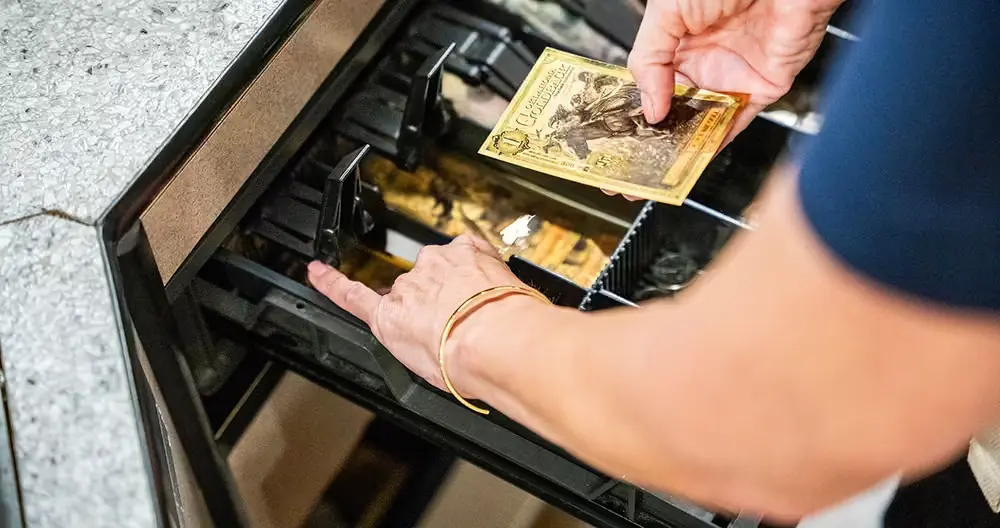
Goldbacks are spendable, voluntary local-currency notes that contain measurable physical gold. Unlike conventional paper bills, each Goldback denomination represents a defined fraction of gold and is designed for practical day-to-day exchange.
Complete Guide to Goldback Notes, Value, and Everyday Use

What is a Goldback in simple terms?
A Goldback is a thin, polymer-based note with embedded gold content and a printed denomination. It combines three ideas in one format:
- Physical gold exposure
- Spendable denomination structure
- Local-currency style usability
For many users, Goldbacks sit between collectible bullion and practical transaction tools.
How Goldback denominations work
Goldback notes are issued in denominations such as 1/2, 1, 2, 5, 10, 25, 50, and 100 (series dependent). Higher denominations represent larger multiples of the base 1 Goldback value.
This structure helps with:
- Everyday spending flexibility
- Easier change-making than large bullion units
- More intuitive pricing at participating merchants
To see denomination examples, visit Arizona Goldbacks for Sale.
Are Goldbacks real gold?
Yes. Goldbacks contain real, measurable gold in a layered format. Their market value is commonly referenced from a current official 1-Goldback rate and scaled by denomination.
If the reference 1 Goldback rate is X, then:
Denomination Value = X × Denomination Multiplier
For a full pricing breakdown, read How Goldbacks Are Priced.
How Goldbacks are used in local economies
Goldback usage is voluntary and works best where merchants publish clear acceptance policies. Typical transaction flow:
- Merchant quotes total in USD.
- Merchant or customer checks Goldback equivalent using the current reference rate.
- Payment is settled in Goldbacks, or as a mixed Goldback + USD transaction.
For merchant playbooks and operational guidance, see Using Goldbacks in Local Economies.
Goldbacks vs coins and bars
Compared with traditional bullion coins and bars, Goldbacks can be easier for smaller-value transactions because denominations are built for divisibility.
Key tradeoffs:
- Goldbacks: high divisibility and practical local-use flow
- Coins: strong recognition and broad bullion market familiarity
- Bars: efficient for larger-value storage and accumulation
Explore the full comparison in Goldbacks vs Coins vs Bars.
Who uses Goldbacks?
Goldback users often include:
- Local merchants offering alternative payment options
- Collectors focused on series artwork and denomination sets
- Buyers seeking spendable gold exposure in smaller units
Use cases vary by region, merchant participation, and individual preference.
Common Goldback questions
Are Goldbacks legal tender?
Goldbacks are generally used as a voluntary medium of exchange, not as U.S. legal tender.
Why does Goldback price change?
Price references can move with market conditions and issuer/dealer updates. Merchant checkout values can differ from informational estimates.
Can I calculate Goldback totals quickly?
Yes. Use the Goldback Calculator to estimate due amounts, mixed payments, and remaining balances.
Final takeaway
Goldbacks are a unique bridge between gold ownership and practical, denomination-based exchange. Understanding denomination math, pricing references, and local acceptance policies helps users evaluate whether Goldbacks fit their collecting and spending goals.