
Using Goldbacks in Local Economies
A practical guide for merchants, buyers, and communities using Goldbacks in local economic exchange.
2026-02-05 • 3 min read
Goldbacks in local economies work best when both sides of a transaction understand the current exchange reference, accepted denominations, and payment expectations. Adoption is voluntary, so clarity and consistency matter more than hype.
Why local Goldback usage is growing
Local Goldback usage is often driven by three factors:
- Interest in spendable gold for small and medium transactions
- Desire for an alternative payment option in community commerce
- Collector overlap, where users both spend and hold notes
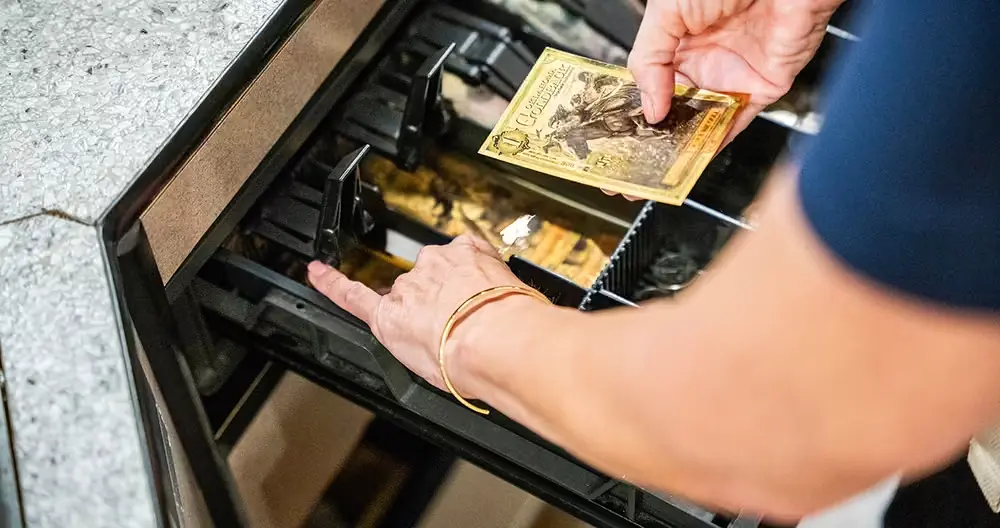
Unlike purely speculative assets, Goldbacks can be presented at checkout in participating local businesses. That real-world utility is what makes merchant training, pricing communication, and customer education so important.
Merchant setup checklist
Before accepting Goldbacks at a store, market booth, or service business, establish clear operating rules.
1. Define acceptance policy
Document which denominations you accept and whether acceptance applies to all products/services or only specific categories.
2. Display your pricing method
Show how your team converts USD totals into Goldback equivalents. Most businesses use a current official rate reference and round according to a written policy.
3. Train front-line staff
Staff should know:
- How to identify denominations quickly
- How to calculate totals and mixed payments
- How to explain any remaining balance or change due
4. Build a refresh cadence
Rates can change, so businesses should set a pricing refresh schedule (for example daily, or multiple times per day during high volatility).
Customer experience best practices
A smooth customer experience reduces confusion and accelerates adoption.
Recommended flow:
- Quote total in USD.
- Show the equivalent Goldback amount using your published rate.
- Accept Goldbacks and calculate remaining due (if any).
- Offer mixed-payment resolution (Goldbacks + USD) when exact denomination combinations are not available.
For transaction math, use the Goldback Calculator.
Goldbacks, change-making, and mixed payments
In practice, mixed payments are common. A customer may pay partially in Goldbacks and complete the remainder in USD. The reverse can also happen if the Goldback payment exceeds the due amount and the merchant returns USD change according to policy.
Operationally, this means your point-of-sale process should support:
- Goldback-only settlement
- Goldback + USD split tender
- Clear handling of change due
Recordkeeping and operational controls
Goldback acceptance should be tracked with the same discipline used for cash or other offline tender types.
Merchants should maintain:
- A daily rate snapshot used at transaction time
- A transaction log format that records USD amount, Goldbacks received, and remaining cash balance
- Staff notes for disputed calculations or exceptions
Consistent records improve accounting clarity and internal auditability.
Community-level adoption strategy
Local circulation improves when multiple businesses follow similar practices. Community organizers and business owners can coordinate around:
- Shared educational language for customers
- Consistent signage templates
- Merchant onboarding guides
- Intro events and demos for first-time users
A fragmented approach creates friction. A shared framework improves trust and repeat usage.
Risk management and policy clarity
Goldback acceptance is voluntary. Businesses should communicate this clearly and avoid implying guaranteed acceptance outside participating merchants.
Useful policy statements include:
- "Goldback acceptance is at merchant discretion."
- "Displayed Goldback values are based on current reference pricing and may change."
- "Final tender options are confirmed at checkout."
SEO-focused user questions
Can businesses legally accept Goldbacks?
In many contexts, businesses can voluntarily accept alternative forms of payment when both parties agree. Businesses should still follow applicable local, state, and federal requirements.
How do stores price goods in Goldbacks?
Most stores start with a USD total, then convert using a current Goldback rate reference and a documented rounding policy.
Are Goldbacks better for local trade than bullion coins?
Goldbacks are often easier to use for smaller, day-to-day transaction sizes because denominations are designed for divisibility.
Final takeaway
Using Goldbacks in local economies is less about novelty and more about process quality. Merchants who publish clear rules, train staff, and keep pricing transparent create the trust required for sustainable, repeat local use.
For pricing mechanics, continue to How Goldbacks Are Priced. For broader context, read What Are Goldbacks?.